• Home
  • Books
  • About Me
  • Blog
  • Resources
    • Tips For Teachers
    • Tips For Writers
  • Events
  • School Visits
  • Contact
  • Click to open the search input field Click to open the search input field Search
  • Menu Menu
Elizabeth Steinglass
  • Link to X
  • Link to Facebook
  • Link to Instagram
  • Link to Rss this site

Archive for category: haiku

all ages, animals, haiku, older kids, silly, younger kids

Haiku: The Wordless Poem

Chipmunk by Gilles Gonthier

Chipmunk by Gilles Gonthier


for sale
a sparrow slips into the attic
trailing toilet paper


watching fireworks
from the car
chickenpox


screen door
song of the birds
cry of the cat


a sudden fall
of acorns—

chipmunk looks
at me


I’ve been focusing on haiku again, preparing submissions for Modern Haiku (deadline July 15) and Frogpond (deadline August 1). (Hint, hint…) I set these aside to post here because they were the most kid-friendly.

Haiku are sometimes called “wordless” poems. The idea is that the reader connects directly with the experience being depicted, not with the words of the poem. For me wordless also refers to all the words that might have been included but weren’t–words that the reader constructs for herself. We know from the words in the second haiku that somewhere there is a screen door, birds singing, and a cat crying but there are no words explaining that the cat is crying because she is on one side of the screen door and unable to hunt the birds happily singing on the other. According to Cor van den Heuvel, the poet Ogiwara Seisensui once described haiku as a circle–half provided by the poet and half provided by the reader. This is just the kind of active reading I hope to inspire in kids.

For more Poetry Friday visit Michelle Heidenrich Barnes at Today’s Little Ditty.

July 12, 2013/15 Comments/by lsteinglass
0 0 lsteinglass lsteinglass2013-07-12 07:08:452013-07-12 07:08:45Haiku: The Wordless Poem
all ages, animals, haiku, older kids, younger kids

Haiku for Kids, Questions for Bloggers

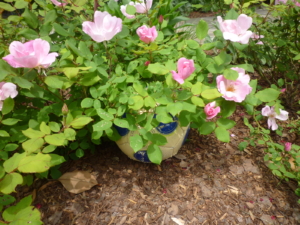
P1040209


pay dirt—
under the roses
a soccer ball


late at night—
a cricket sings
in the lizard’s cage


© Elizabeth Steinglass, 2013, all rights reserved


Ever since I started this blog, I’ve had two recurrent questions: Who is my audience? And why do I do it? It’s been a year and a half now, and I’m still not sure I have any good answers. Am I writing for poets, teachers, kids, friends? Is my goal to write more, share more, promote more, connect more?

I’m the kind of person who likes to talk through questions like these. So, fellow poet bloggers, I ask you:

1. Who is the audience for your blog?

2. Why do you blog?

I’d love to hear your thoughts in the comments below.

May 16, 2013/35 Comments/by lsteinglass
0 0 lsteinglass lsteinglass2013-05-16 22:05:122013-05-16 22:05:12Haiku for Kids, Questions for Bloggers
adults, haiku

A Haiku for Mother’s Day

Hachiya persimmons by Downtowngal

Hachiya persimmons by Downtowngal


Wild persimmons,
The mother eating
The bitter parts.

Issa


Along with Basho, Buson, and Shiki, Issa (1763-1827) is considered one of the four masters of Japanese haiku. Issa lived a particularly tragic life, losing his mother at age three, his inheritance and home after the death of his father, the wife he adored and their three children, all very early in their lives. To learn more about Issa and his poetry,
I recommend Anita Virgil’s discussion of his life and work in episode 16 of Haiku Chronicles.


Happy Mother’s Day


May 12, 2013/3 Comments/by lsteinglass
0 0 lsteinglass lsteinglass2013-05-12 08:34:132013-05-12 08:34:13A Haiku for Mother’s Day
adults, haiku, older kids

Why Haiku?

Cherry Blossoms by Tina dela Rosa

Cherry Blossoms by Tina dela Rosa


plank bridge—
clinging for their lives
ivy vines

Basho


the harvest moon
I stroll round the pond
till the night is through

Basho


storm—chestnuts
race along
the bamboo porch

Shiki


The more time I spend reading and writing haiku, the more I am convinced of their incredible depth and of their value in today’s world.

Haiku are an ideal form for everyone–especially kids.


Why?

1. Haiku focus on a single intense moment in the present. Our current culture pushes us to rush from one thing to the next, while thinking about a multitude of other things. Haiku provide an opportunity to slow down, pay attention to now, and closely observe the world in front of us.

2. Haiku focus on the natural world and on our connections to the natural world. Yesterday we had record-breaking heat in Washington, DC after a strangely cool spring. Each day presents new evidence that we have damaged our planet. Now more than ever, we need to attend to the natural world and our connections to it.

3. Haiku require readers to actively participate in making meaning. Readers use the images from the poems to paint pictures in their heads. These pictures often include sounds, smells, textures, and tastes. Readers must infer the signficance of the images and their connections. Though haiku images are concrete and their words often plain, haiku are complex and their readers cannot be passive.

Unfortunately, I think most of us learn a very simple definition of haiku—a nature poem of 17 syllables in three lines—that misses its essential characteristics. There are many fabulous discussions of haiku written by more experienced students and writers, but instead of sending you away, I will give you my current understanding.


What are the essential characteristics of haiku?

1. Haiku are short. They are one moment, expressed in one breath. The Japanese poets who developed the form believed one breath was best expressed in 17 onji or sound symbols. Some poets who write haiku in English write them in 17 syllables. However onji are not exactly parallel to syllables, and to many 17 syllables feels like more than one breath. For this reason, many poets of haiku in English write poems of fewer syllables.

2. Haiku are traditionally three lines. Typically, one line (the first or third) presents a natural context: a plank bridge, the harvest moon, a storm. The other two lines describe something more: ivy vines clinging, a stroll round a pond, chestnuts racing along a porch. Sometimes the second line of the more includes a turn or surprise, such as a stroll round a pond that lasts the whole night. By connecting the two parts of the haiku, the reader experiences a moment of discovery or aha. Some haiku poets accomplish this in one line or four, using the line breaks as a tool of expression.

3. Haiku provide direct experience. They are written in the present tense. They do not use metaphor, simile, personification, or rhyme because that would interfere with the direct experience.

4. Haiku are about the interrelatedness of humans and nature. Often the human is there only as an attentive observer. Other times the human is represented implicitly by a verb requiring human action, such as lighting the lanterns. The human can also be represented by a pronoun such as I or me or my.

5. Haiku is not just a form of poetry. It is a way of being in the world.


I hope I’ve convinced you to give it a try. As with most things, it’s harder than it looks and worth the effort.


For more information:

The Haiku Society of America has a page of educational resources, which includes an introduction to haiku.

Jane Reichhold’s Bare Bones School of Haiku provides 14 lessons on haiku and how to write them.

Robyn Hood Black has written many beautiful haiku. On her website she provides a list of haiku resources and lesson plans for K-2 and grades 3 and up.

Diane Mayr posts lots of haiku “stickies” and other delectables on her blog Random Noodling.

Finally, this week I typed “haiku” into itunes search and discovered Haiku Chronicles podcasts. What a find! They have over 25 episodes dedicated to all things haiku. They delve into the history of the form in Japan and in the US. Some include old recordings of poets discussing and reading haiku. In the 8th episode Anita Virgil provides her 9 questions for judging haiku. She says most don’t make it past question 2!


For more Poetry Friday, visit, yes, Diane Mayr’s Random Noodling!

Come back on Tuesday, April 16th to see the 2013 Kidlitosphere Progressive Poem progress.


(c) 2013, Elizabeth Steinglass, all rights reserved
April 11, 2013/18 Comments/by lsteinglass
0 0 lsteinglass lsteinglass2013-04-11 21:28:422013-04-11 21:28:42Why Haiku?
adults, animals, haiku, older kids, plants, younger kids

Haiku for Late Winter or Early Spring

photo-152


gray days—
who can remember
lemonade?


morning moon:
trying to show
the cat


closed buds—
in every mouth
a song


the skip
in her hello—

spring!


(c) 2013 Elizabeth Steinglass

March 8, 2013/8 Comments/by lsteinglass
0 0 lsteinglass lsteinglass2013-03-08 13:44:532013-03-08 13:44:53Haiku for Late Winter or Early Spring
all ages, haiku, older kids, school, younger kids

Three Winter Haiku


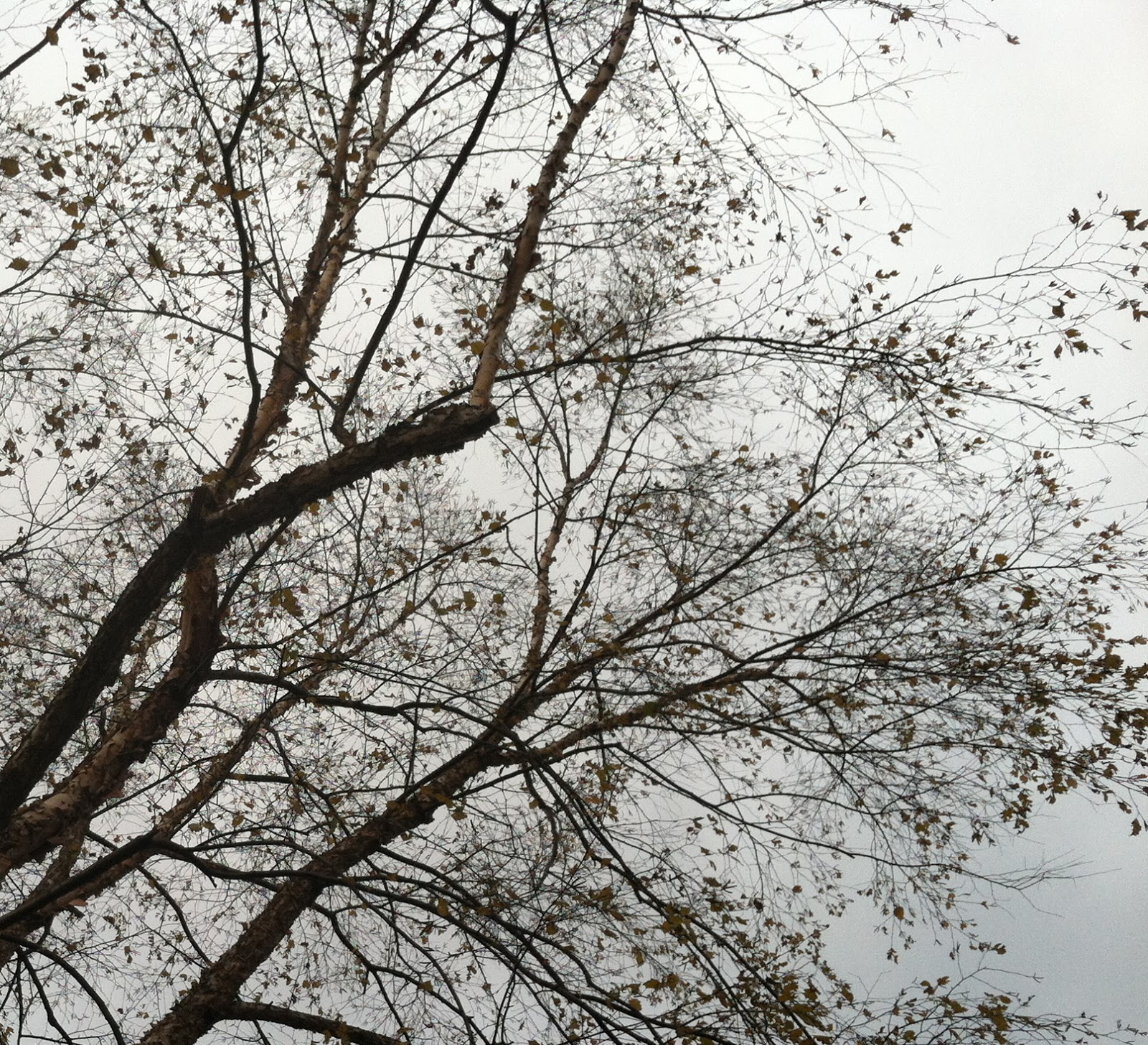
winter morning
walking to school we see
our words

flurries—
a sudden accumulation
at the window

winter storm warning:
ninety percent chance
of freedom!

I’ve been drawn to haiku again this week. It’s like standing by the door frame in the kitchen to be measured. Maybe if I go back to the same place, I’ll be able to see how much I’ve grown. This time I’ve been thinking about the challenge of writing haiku that are both surprising and meaningful. Sometimes I come up with interesting images and words, but even I’m not sure what they add up to. Other times, the meaning is too clear and too familiar. The trick is to set up fresh images that give the reader an experience of unfolding understanding. And, as always, there’s the question of audience: will these images, these words, these meanings speak to kids?

For more Poetry Friday go to Tabatha Yeatts at The Opposite of Indifference.

(c) 2013 Elizabeth Ehrenfest Steinglass, all rights reserved
January 25, 2013/12 Comments/by lsteinglass
0 0 lsteinglass lsteinglass2013-01-25 11:43:002013-01-25 11:43:00Three Winter Haiku
adults, all ages, cinquain, haiku, older kids, younger kids

Three Dishes for Thanksgiving

Thanksgiving—
grateful for extra helpings
of cousins

new world
learning to celebrate
turkey kimchi flan

Around
The old table
We stretch ourselves to share
The year’s sweet and salty harvest
Again.

Last week Teaching Authors put out a challenge to write a Thanku. I’ve posted my effort above and a cinquain for dessert. It certainly was challenging to find a fresh approach to a holiday that is by definition traditional. I hope you all had a wonderful holiday.For more Poetry Friday go to A Year of Reading.


(c) 2012 Elizabeth Ehrenfest Steinglass, all rights reserved

November 23, 2012/16 Comments/by lsteinglass
0 0 lsteinglass lsteinglass2012-11-23 13:26:002012-11-23 13:26:00Three Dishes for Thanksgiving
adults, all ages, haiku, older kids, younger kids

Autumn Haiku for Kids

red apples
hang from branches
I jump

bare branches—
a pencil
after markers

I’ve been studying haiku again. Every time I go back to them, I see more. Those three lines seem infinitely deep. I’ve been reading haiku written for kids and haiku written for adults, and I’m noticing some differences. (These are, of course, broad generalizations.)


Haiku for kids tend to be written in three lines and 17 syllables–5 syllables in the first line, 7 in the second, and 5 in the third. They often seem to be a single sentence about a single topic broken into three parts. The third line tends to be a shift in focus on the main topic, for example, a flamingo whose only competition is her reflection (in a haiku by Jane Yolen), or a chicken scratching dirt and making little tornadoes of dust (in a haiku by Christine O’Connell George). (Both of these haiku are in the National Geographic Book of Animal Poetry.)


Haiku for adults are often shorter than 17 syllables and sometimes two or four lines. The moment of realization in a haiku for adults seems to occur in the space between two contrasting images, for example faces in a train and petals on a branch (in the well-known haiku by Ezra Pound). Most haiku for adults do not use capital letters or punctuation. If they are punctuated, it is generally with a dash, ellipsis, or comma.


This week I’ve tried to write an adult form of haiku with kid-friendly images.


For more Poetry Friday visit Anastasia Suen’s Booktalking.

(c) 2012 Elizabeth Ehrenfest Steinglass, all rights reserved

November 16, 2012/10 Comments/by lsteinglass
0 0 lsteinglass lsteinglass2012-11-16 16:39:002012-11-16 16:39:00Autumn Haiku for Kids
haiku, older kids

Back-to-School Haiku

summer sun
creeps across the floor
five days more

in the trees
cicadas whisper–
the grind of the bus

back to school:
familiar hallways
unfamiliar

assigned seats–
pointy crayons
in neat rows

history–
someone else’s name
in my book

cafeteria–
stepping out
on the ice

(c) 2012 Elizabeth Ehrenfest Steinglass, all rights reserved
For more Poetry Friday go to Sylvia Vardell’s Poetry for Children.

August 31, 2012/14 Comments/by lsteinglass
0 0 lsteinglass lsteinglass2012-08-31 10:30:002012-08-31 10:30:00Back-to-School Haiku
all ages, haiku

August Haiku

tomatoes
tug the vine
waiting

a summer sunshower
harvesting rainbow chard

scrubbed beets
a sink full
of pink hands

a dog
     a splash
          swaying cattails

one more carrot
yanked from the garden
a car starting

August leaves
sag in the afternoon
I count days

(c) 2012 Elizabeth Ehrenfest Steinglass, all rights reserved
We were lucky enough to spend a few days in Vermont with dear friends. The highlight of our trip was harvesting vegetables from the garden–tomatoes, carrots, beets, broccoli, and rainbow chard. The kids especially loved pulling the carrots and beets from the dirt and scrubbing them in the sink. I wrote these haiku when we got home, savoring my memories of those days far from the city. They make quite a contrast to the haiku from June. The end of the summer is in the air. For more Poetry Friday go to Violet Nesdoly/poems.

August 10, 2012/11 Comments/by lsteinglass
0 0 lsteinglass lsteinglass2012-08-10 10:42:002012-08-10 10:42:00August Haiku
Page 2 of 3123
Popular
  • ProcessFebruary 25, 2016 - 11:22 pm
  • Happy Poetry Friday!December 12, 2019 - 6:00 pm
  • Back from Poetry Camp!October 6, 2016 - 7:49 pm
  • The Poetry Friday Party is Here!May 2, 2013 - 9:19 pm
Recent
  • Health, Peace, JoyDecember 25, 2020 - 7:50 am
  • I am Winter’s MeadowDecember 10, 2020 - 7:39 pm
  • ThanksgivingNovember 27, 2020 - 7:44 am
  • It’s Hard to ListenNovember 6, 2020 - 8:17 am
Comments
  • lsteinglassYes, of course, you are welcome to use it--I was hoping...November 6, 2025 - 3:31 pm by lsteinglass
  • Suzi W.Who knows if you are still looking at comments five years...November 6, 2025 - 3:01 pm by Suzi W.
  • Liz Garton ScanlonSnowfog is the perfect word and this poem is just all-around...December 27, 2020 - 8:50 am by Liz Garton Scanlon
  • Michelle BarnesSo beautiful, Liz. Love the haiku and the sense of peace...December 26, 2020 - 11:36 am by Michelle Barnes
Tags

Follow me on Facebook

X Logo X Logo Followon X RSS Feed Logo RSS Feed Logo Subscribeto RSS Feed

Interesting links

Here are some interesting links for you! Enjoy your stay :)
Popular
  • ProcessFebruary 25, 2016 - 11:22 pm
  • Happy Poetry Friday!December 12, 2019 - 6:00 pm
  • Back from Poetry Camp!October 6, 2016 - 7:49 pm
  • The Poetry Friday Party is Here!May 2, 2013 - 9:19 pm
Recent
  • Health, Peace, JoyDecember 25, 2020 - 7:50 am
  • I am Winter’s MeadowDecember 10, 2020 - 7:39 pm
  • ThanksgivingNovember 27, 2020 - 7:44 am
  • It’s Hard to ListenNovember 6, 2020 - 8:17 am
Comments
  • lsteinglassYes, of course, you are welcome to use it--I was hoping...November 6, 2025 - 3:31 pm by lsteinglass
  • Suzi W.Who knows if you are still looking at comments five years...November 6, 2025 - 3:01 pm by Suzi W.
  • Liz Garton ScanlonSnowfog is the perfect word and this poem is just all-around...December 27, 2020 - 8:50 am by Liz Garton Scanlon
  • Michelle BarnesSo beautiful, Liz. Love the haiku and the sense of peace...December 26, 2020 - 11:36 am by Michelle Barnes
Tags

Follow us on Facebook

© Copyright - Elizabeth Steinglass
Site Designed by Connect4 Consulting.
  • Home
  • Books
  • About Me
  • Blog
  • Resources
  • Events
  • School Visits
  • Contact
Scroll to top Scroll to top Scroll to top