• Home
  • Books
  • About Me
  • Blog
  • Resources
    • Tips For Teachers
    • Tips For Writers
  • Events
  • School Visits
  • Contact
  • Click to open the search input field Click to open the search input field Search
  • Menu Menu
Elizabeth Steinglass
  • Link to X
  • Link to Facebook
  • Link to Instagram
  • Link to Rss this site

Archive for category: younger kids

adults, all ages, older kids, younger kids

Seasonal Feasts

Oh, the night has been nibbling the day!
We barely notice it slipping away,

Until the morning’s been swallowed by night,
And we stumble to breakfast, starving for light.

We wonder what happened to sunlight at dinner,
Finally aware that the days have grown thinner.

That’s when we welcome our families to feast,
To light the candles, and look to the east,

Knowing the night has finished its snack,
And tomorrow the day will start biting back!


For me the worst thing about winter isn’t the cold. It’s the dark. The early dusk makes me tired and ready for bed. Our ancestors were wise to establish traditions that bring light and warmth to the winter darkness. Imagine how terrible the depths of winter would seem without the candles, the cookies, and the togetherness.

Thanks to Heidi for organizing a new celebration of light and togetherness and for hosting today’s Poetry Friday.

Happy Holidays.

(c) 2012 Elizabeth Ehrenfest Steinglass, all rights reserved

December 21, 2012/8 Comments/by lsteinglass
0 0 lsteinglass lsteinglass2012-12-21 11:00:002012-12-21 11:00:00Seasonal Feasts
all ages, animals, older kids, younger kids

The Snail’s Lament


You might think
This mobile home’s
A perfect fit
For those who roam,
But this big wheel
Tends to sag,
So, actually,
It’s more of a drag.

I confess I have this fantasy that somewhere there’s a writer who is so amazing, he or she doesn’t have to revise. But I know in my heart of hearts that this perfect first-draft writer doesn’t exist. Everyone revises. Revising is part of writing. It’s necessary, and sometimes it’s even fun. It can be a process involving play, exploration, and discovery. I like looking back at what I’ve written to see what I’ve said, what seems to want to be said, and then revising to say it more clearly or artfully. As someone who enjoys revising and as an observer of kid-writers who tie themselves in knots trying to write perfectly the first time, I’ve been wanting to share some of my revisions. So below is the first part of what happened between finding the snail and this week’s poem. This is straight from my notebook:

Maybe you think
It’s so convenient
To have a mobile home?
Actually, if it has no wheels
It’s actually kind of a drag.
Drag sag wag brag tag flag bag gag hag jag lag nag rag stag
Actually it’s hard to wag
And since it’s heavy
It’s more of a drag.
Actually
it tends to sag
and it’s hard to wag
So having a shell
Is honestly,
More of a drag.
And it has no wheels
So it’s more of a drag.
You might think
I have cause to brag

I think you can see that my first attempt wasn’t so much about writing a good poem as it was about getting an idea going—discovering a seed that I could tend and grow. I also think you can see that I found that seed there right in the first five lines—the snail’s point of view, the misconception, and the word drag. Where did these ideas come from? The snail. This poem started when I leaned over to get a good look at the little guy, and I was struck by how hard he seemed to be working to drag that shell around.
I think you can also see that I pretty quickly settled on the word drag because of its double meaning. Once I decided to go with drag, I had the voice of the poem, and I had the beginning of the rhyme scheme. I then started exploring different options that rhyme with drag, like wag and brag. You can see that after a bit of experimenting, I went back to some words I had early on—mobile home, wheel, and sag. Once I had these pieces, the rest came together without too much trouble.
When I look back at my process, I think maybe I don’t need that fantasy of the perfect first-draft writer. I think maybe that perfect first-draft writer is missing all the fun.
For more Poetry Friday see Robyn Hood Black at Read, Write, Howl.

(c) 2012 Elizabeth Ehrenfest Steinglass, all rights reserved

December 7, 2012/15 Comments/by lsteinglass
0 0 lsteinglass lsteinglass2012-12-07 11:07:002012-12-07 11:07:00The Snail’s Lament
all ages, animals, older kids, younger kids

The Hungry Giraffe

photo by Hans Stieglitz

Dining up high
On leaves in the sky
With the clouds
Near your eyes and the
Swifts sweeping by
Is fine, until you find your mouth is
Dry and the water
Enveloping your toes.

I’m still reading The National Geographic Book of Animal Poems. Every day. Just like a kid. This week I stopped short when I got to the two acrostic poems by Avis Harley. They use such wonderful and fun language. One thing I appreciate about them is that the vertical words are not the animal’s name; they’re about the animal, another part of the poem, another expression of the animal’s essence. The poem above is my response to Harley’s poem about giraffes which is titled “Above All” and is from her book African Acrostics.

For more Poetry Friday see Amy Ludwig VanDerwater at The Poem Farm.

(c) 2012 Elizabeth Ehrenfest Steinglass, all rights reserved

November 30, 2012/14 Comments/by lsteinglass
0 0 lsteinglass lsteinglass2012-11-30 11:38:002012-11-30 11:38:00The Hungry Giraffe
adults, all ages, cinquain, haiku, older kids, younger kids

Three Dishes for Thanksgiving

Thanksgiving—
grateful for extra helpings
of cousins

new world
learning to celebrate
turkey kimchi flan

Around
The old table
We stretch ourselves to share
The year’s sweet and salty harvest
Again.

Last week Teaching Authors put out a challenge to write a Thanku. I’ve posted my effort above and a cinquain for dessert. It certainly was challenging to find a fresh approach to a holiday that is by definition traditional. I hope you all had a wonderful holiday.For more Poetry Friday go to A Year of Reading.


(c) 2012 Elizabeth Ehrenfest Steinglass, all rights reserved

November 23, 2012/16 Comments/by lsteinglass
0 0 lsteinglass lsteinglass2012-11-23 13:26:002012-11-23 13:26:00Three Dishes for Thanksgiving
adults, all ages, haiku, older kids, younger kids

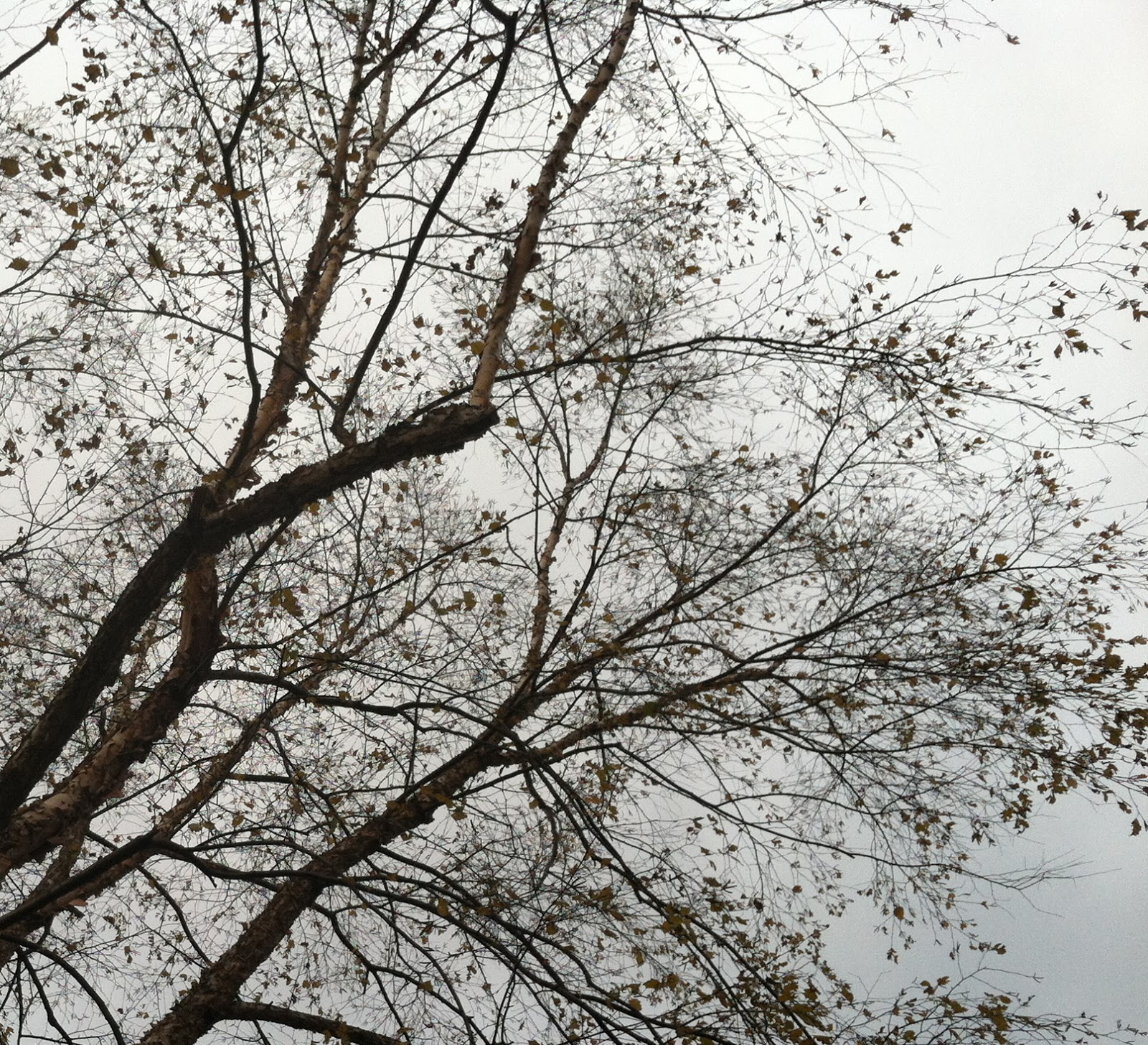
Autumn Haiku for Kids

red apples
hang from branches
I jump

bare branches—
a pencil
after markers

I’ve been studying haiku again. Every time I go back to them, I see more. Those three lines seem infinitely deep. I’ve been reading haiku written for kids and haiku written for adults, and I’m noticing some differences. (These are, of course, broad generalizations.)


Haiku for kids tend to be written in three lines and 17 syllables–5 syllables in the first line, 7 in the second, and 5 in the third. They often seem to be a single sentence about a single topic broken into three parts. The third line tends to be a shift in focus on the main topic, for example, a flamingo whose only competition is her reflection (in a haiku by Jane Yolen), or a chicken scratching dirt and making little tornadoes of dust (in a haiku by Christine O’Connell George). (Both of these haiku are in the National Geographic Book of Animal Poetry.)


Haiku for adults are often shorter than 17 syllables and sometimes two or four lines. The moment of realization in a haiku for adults seems to occur in the space between two contrasting images, for example faces in a train and petals on a branch (in the well-known haiku by Ezra Pound). Most haiku for adults do not use capital letters or punctuation. If they are punctuated, it is generally with a dash, ellipsis, or comma.


This week I’ve tried to write an adult form of haiku with kid-friendly images.


For more Poetry Friday visit Anastasia Suen’s Booktalking.

(c) 2012 Elizabeth Ehrenfest Steinglass, all rights reserved
November 16, 2012/10 Comments/by lsteinglass
0 0 lsteinglass lsteinglass2012-11-16 16:39:002012-11-16 16:39:00Autumn Haiku for Kids
animals, younger kids

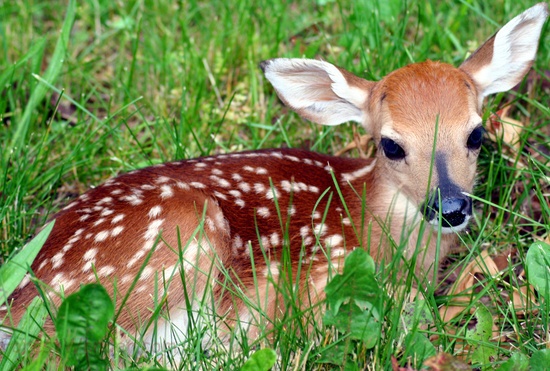
To Her Fawn


Whitetail Fawn courtesy of Forest Wander

Dear little deer,
Curl up and nest.
Mama must eat,
And you must rest.
Dear little deer,
Lie still, right here.
In this nook you’ve
Nothing to fear.
Among the flowers
That dot the field,
Your spots will bloom
And form a shield.
Among the bees
That dart and drone,
You’ve many friends.
You’re not alone.
Dear little deer,
Stay here and wait.
I’ll be right back.
I won’t be late.
Before the sky
Becomes bright blue,
I will be here
To nuzzle you.

As I was reading more of the poetry in the National Geographic Book of Animal Poetry, I noticed a few peaceful poems with the same form–quatrains of four syllables. I think there is something about the perfect symmetry and balance of these lines that makes them so stable and reassuring. I tried it in the poem above, which gave me plenty of grief this week. Sometimes, I wonder if a poem just doesn’t want to be.

For more Poetry Friday, go to Think Kid, Think!

(c) 2012 Elizabeth Ehrenfest Steinglass, all rights reserved
November 9, 2012/3 Comments/by lsteinglass
0 0 lsteinglass lsteinglass2012-11-09 11:28:002012-11-09 11:28:00To Her Fawn
adults, all ages, animals, older kids, younger kids

The Two Worlds of the Four-Eyed Fish


Anableps from wikipedia

Above I see what’s clear and dry,
The birds that swim the sea blue sky,
The crabs that drift and come to die,
The roots that rise above my eye.
I also know a world that flows—
Where sunlight sways and algae grows
On roots that hide the friends and foes
Who ride the rocking dim below.


The Four-Eyed Fish actually has two eyes but each eye has two parts–the top part is adapted to seeing above the water and the bottom part is adapted to seeing below the water. They swim along the surface looking at both worlds simultaneously.

For more Poetry Friday go to Mainely Write.

(c) 2012 Elizabeth Ehrenfest Steinglass, all rights reserved

November 2, 2012/13 Comments/by lsteinglass
0 0 lsteinglass lsteinglass2012-11-02 10:20:002012-11-02 10:20:00The Two Worlds of the Four-Eyed Fish
adults, all ages, animals, older kids, younger kids

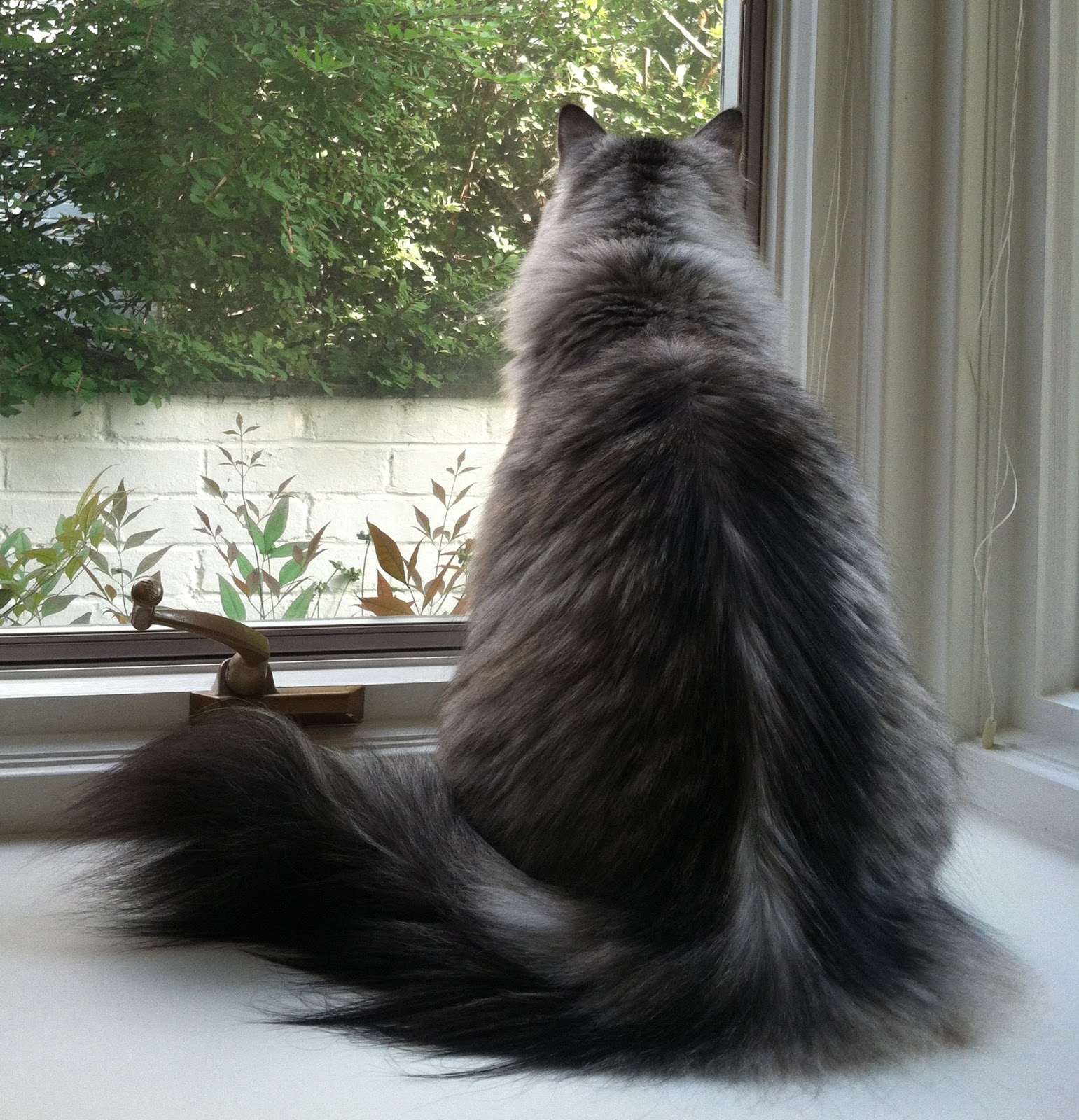
The Cat and the Chipmunk

In the window Cat sits and stares,
Watching with all of her, every last hair,
Striving to kill with wanting and glares.
Chipmunk loiters in the dewy grass,
Nibbling an acorn, making it last,
Knowing, for certain, that cat’s behind glass.

All week I’ve been reading from the gorgeous Book of Animal Poetry edited by J. Patrick Lewis and published by National Geographic. I’ve been strangely drawn to the poems structured in tercets. I’m not sure if this has deep psychological significance or if I’m just attracted to a form I haven’t used much. In any case I have been experimenting all week and today I have posted my own animal poem in tercets.


For more Poetry Friday see Linda at TeacherDance.

(c) 2012 Elizabeth Ehrenfest Steinglass, all rights reserved
October 26, 2012/14 Comments/by lsteinglass
0 0 lsteinglass lsteinglass2012-10-26 10:25:002012-10-26 10:25:00The Cat and the Chipmunk
adults, older kids, plants, younger kids

Black-Eyed Susans


Scattered sun drops
Dot the earth
Stretching, reaching toward the sky
Gazing
With their one black eye
Nose cones pointed way up high
Petals burning sun-burst bright
Ready to rocket
Away
Good-bye
Back to the sun
In the far away sky
(c) 2012 Elizabeth Ehrenfest Steinglass, all rights reserved

For more Poetry Friday go to Paper Tigers.

September 28, 2012/12 Comments/by lsteinglass
0 0 lsteinglass lsteinglass2012-09-28 10:14:002012-09-28 10:14:00Black-Eyed Susans
adults, animals, older kids, younger kids

Butterfly

Tumbling through sunlight

Like a leaf in the wind,
The kite of a fairy
That’s broken its string,
The butterfly waltzes
To the echoes of spring,
Without ever wondering

What’s lifting her wings.

I’ve been watching the swallowtails gather at the butterfly bush. I caught a picture of this one last week. For the poem I thought spring worked better than autumn, so of course I used “poetic license.” Why limit yourself to what actually happened?

For more Poetry Friday go to No Water River.

(c) 2012 Elizabeth Ehrenfest Steinglass, all rights reserved

September 21, 2012/6 Comments/by lsteinglass
0 0 lsteinglass lsteinglass2012-09-21 10:11:002012-09-21 10:11:00Butterfly
Page 4 of 512345
Popular
  • ProcessFebruary 25, 2016 - 11:22 pm
  • Happy Poetry Friday!December 12, 2019 - 6:00 pm
  • Back from Poetry Camp!October 6, 2016 - 7:49 pm
  • The Poetry Friday Party is Here!May 2, 2013 - 9:19 pm
Recent
  • Health, Peace, JoyDecember 25, 2020 - 7:50 am
  • I am Winter’s MeadowDecember 10, 2020 - 7:39 pm
  • ThanksgivingNovember 27, 2020 - 7:44 am
  • It’s Hard to ListenNovember 6, 2020 - 8:17 am
Comments
  • lsteinglassYes, of course, you are welcome to use it--I was hoping...November 6, 2025 - 3:31 pm by lsteinglass
  • Suzi W.Who knows if you are still looking at comments five years...November 6, 2025 - 3:01 pm by Suzi W.
  • Liz Garton ScanlonSnowfog is the perfect word and this poem is just all-around...December 27, 2020 - 8:50 am by Liz Garton Scanlon
  • Michelle BarnesSo beautiful, Liz. Love the haiku and the sense of peace...December 26, 2020 - 11:36 am by Michelle Barnes
Tags

Follow me on Facebook

X Logo X Logo Followon X RSS Feed Logo RSS Feed Logo Subscribeto RSS Feed

Interesting links

Here are some interesting links for you! Enjoy your stay :)
Popular
  • ProcessFebruary 25, 2016 - 11:22 pm
  • Happy Poetry Friday!December 12, 2019 - 6:00 pm
  • Back from Poetry Camp!October 6, 2016 - 7:49 pm
  • The Poetry Friday Party is Here!May 2, 2013 - 9:19 pm
Recent
  • Health, Peace, JoyDecember 25, 2020 - 7:50 am
  • I am Winter’s MeadowDecember 10, 2020 - 7:39 pm
  • ThanksgivingNovember 27, 2020 - 7:44 am
  • It’s Hard to ListenNovember 6, 2020 - 8:17 am
Comments
  • lsteinglassYes, of course, you are welcome to use it--I was hoping...November 6, 2025 - 3:31 pm by lsteinglass
  • Suzi W.Who knows if you are still looking at comments five years...November 6, 2025 - 3:01 pm by Suzi W.
  • Liz Garton ScanlonSnowfog is the perfect word and this poem is just all-around...December 27, 2020 - 8:50 am by Liz Garton Scanlon
  • Michelle BarnesSo beautiful, Liz. Love the haiku and the sense of peace...December 26, 2020 - 11:36 am by Michelle Barnes
Tags

Follow us on Facebook

© Copyright - Elizabeth Steinglass
Site Designed by Connect4 Consulting.
  • Home
  • Books
  • About Me
  • Blog
  • Resources
  • Events
  • School Visits
  • Contact
Scroll to top Scroll to top Scroll to top